FAVORIT
SaaS cost estimation from drawings
Costbl (costbl.ru) is a manufacturing SaaS: upload a drawing → get metal-part cost of goods. Project ran 5+ months across two stages: first a chat with PDF parsing, then a full workflow with a calculation graph. The video shows a real drawing and cost calculation.
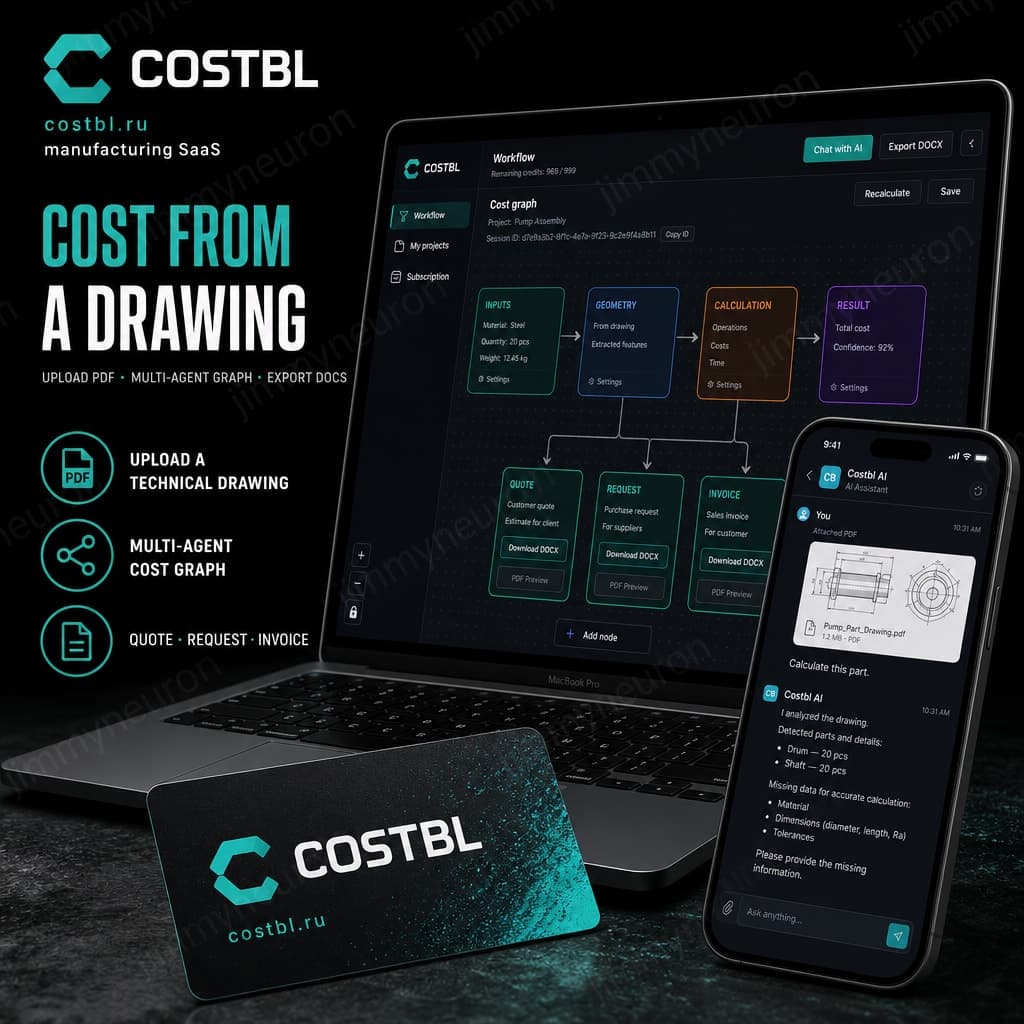
5+ months
Project duration
2 (chat → graph)
Stages
multi-agent AI
Architecture
costbl.ru
Product
- 01 · Client
Costbl is a FAVORIT-line product for metalworking and manufacturing.
- 02 · Challenge
A drawing is not a ready calculation: parts, operations, dimensions and material must be extracted.
- 03 · Solution
More than 5 months, two stages.
- 04 · Result
Launched Costbl (costbl.ru) - SaaS cost estimation for metal parts from drawings.
Costbl: cost estimation from drawings | JimmyNeuron case
About the client
Costbl is a FAVORIT-line product for metalworking and manufacturing. Goal: replace manual Excel costing and turn a drawing into clear cost of goods plus a document pack (proposal, request, invoice).
The project ran for more than five months. This was not “ship a chat in one sprint”: we tried approaches and research tracks, brought in analysts and engineers, and worked by OKRs. In the end we locked a working approach and built a multi-agent system.
The challenge we started with
- A drawing is not a ready calculation: parts, operations, dimensions and material must be extracted
- When data is missing, the system must ask rather than "guess silently"
- Cost must be reproducible and clear to an engineer/analyst
- Long R&D: different approaches, OKRs, analysts and engineers working together
- From a chat MVP to a full workflow graph without losing the meaning of the calculation
A long road: 5+ months and two stages
Not a linear "feature after feature". We tried different approaches and research, involved analysts and engineers, and checked progress against OKRs. In the end we fixed the architecture and built a multi-agent system.
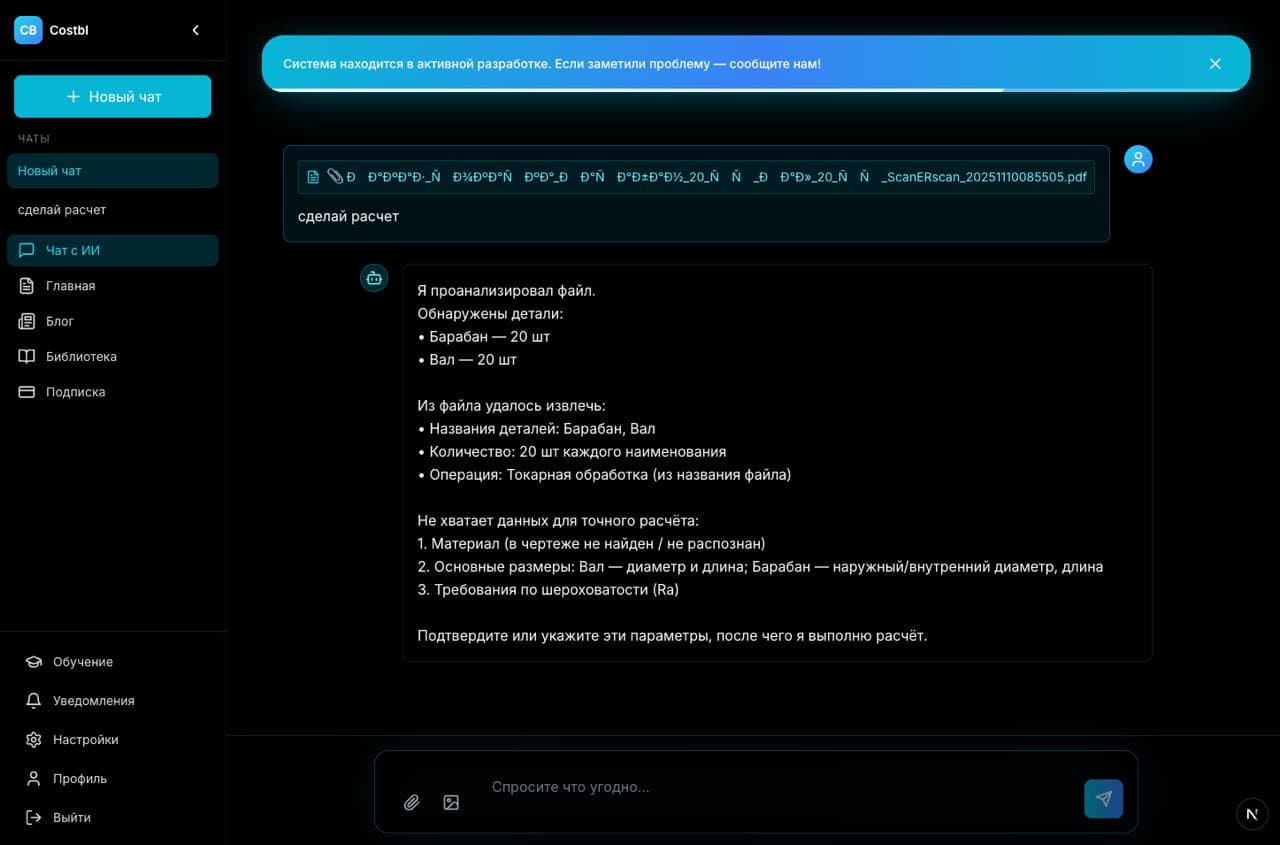
Stage 1 - AI chat on a drawing (prototype)
The first working pipeline: the user uploads a PDF and writes "make a calculation". The system parses the file, finds parts and operations, and states honestly what is missing (material, dimensions, roughness). The screenshots below show stage 1 / the prototype, not the final product.
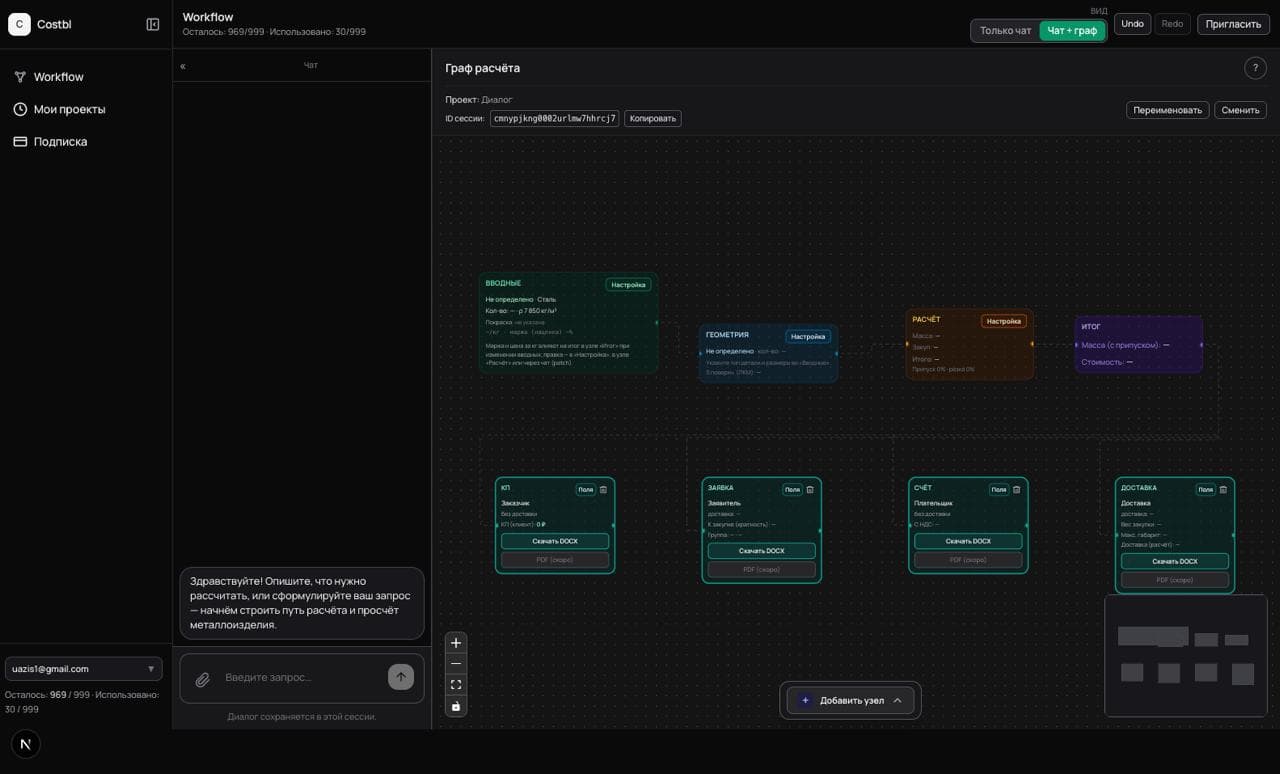
Stage 2 - full calculation (as it is now)
As in production now: a multi-agent workflow and live cost calculation from a drawing. The video below shows stage 2 specifically: a real drawing and cost calculation, not a prototype.
Multi-agent system
The result of the research is a multi-agent pipeline: drawing reading, geometry, calculation and documents are linked into a reproducible workflow. The approach was not found on the first attempt - it came through iterations with engineers and analysts.
Video
Stage 2: real drawing and cost calculation
Gallery
How it works
User scenario
- Uploads a drawing / describes the product in chat
- Clarifies material, dimensions and missing parameters
- Views the calculation path on the graph (stage 2)
- Gets the final cost and documents (quote / request / invoice)
Team / admin scenario
- Manages OKRs and the quality of calculation scenarios
- Brings analysts and engineers together around the pipeline
- Develops graph nodes and subscription limits
Technology
- Duration
- Over 5 months · 2 stages
- Stage 1
- AI chat · PDF drawing parsing
- Stage 2
- Chat + graph · multi-agent
- Product
- costbl.ru
Timeline: More than 5 months: stage 1 (chat) → stage 2 (graph + multi-agents)
Result and business effect
Launched Costbl (costbl.ru) - SaaS cost estimation for metal parts from drawings. 5+ months, two stages: chat with PDF parsing → full multi-agent calculation graph. The page includes screenshots of both stages and a video of a real calculation.
A fit if you need
- You need cost estimation from drawings, not Excel - AI agents
- You want a transparent calculation path (graph / workflow) - Web applications
- You are ready for R&D with engineers and analysts under OKRs - AI agents
Frequently asked questions
Questions about this type of project, the same ones clients ask before a similar build.
What happens if the agent gets it wrong?
A mistake stays a draft. Anything touching money, stock or new counterparties needs a person to confirm by default. When the agent is unsure, it does not act; it creates a task for a person. Every action is in the log and can be reversed.
Who approves what the agent does?
You decide. At the start we agree where the line is: for example, the agent creates CRM tasks on its own but only drafts invoices and supplier orders for a manager to approve. Once the team trusts the output, the line can move.
Do we have to change 1C or our CRM?
No. We connect to what you already run: via API, 1C data exchange or file export. If a system has no way to accept data from outside, we will tell you during the estimate.
How is this better than a template-based bot?
A template bot breaks when a supplier changes the email format. An agent understands free text and tables in different layouts, so you do not have to force partners into a template.
Need AI costing for manufacturing?
We’ll discuss a contour like Costbl: drawing → multi-agent calculation → documents. No “two-week” promises when serious R&D is required.
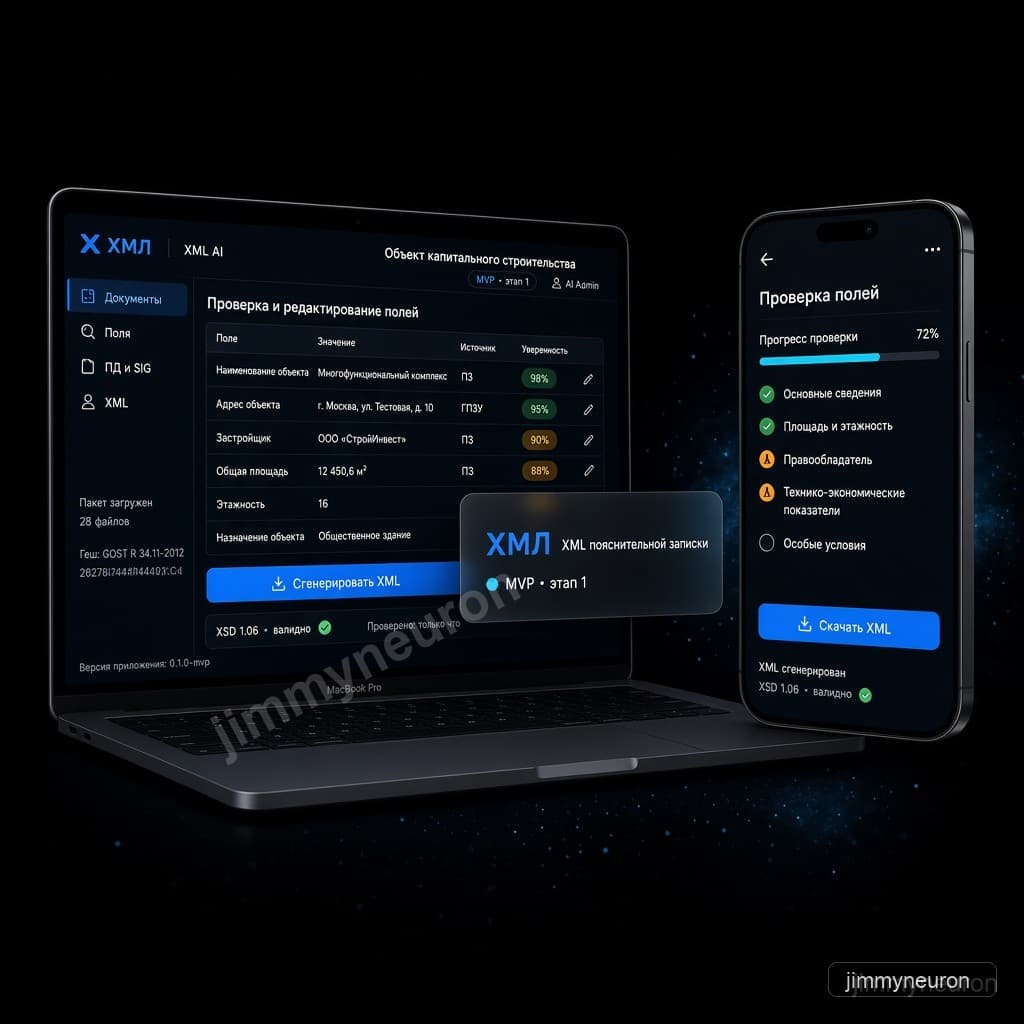
KhML
KhML - Explanatory Note XML
MVP: a set of construction documents → OCR/AI fields → design documentation + SIG → valid explanatory note XML. Stage 1 of 4.
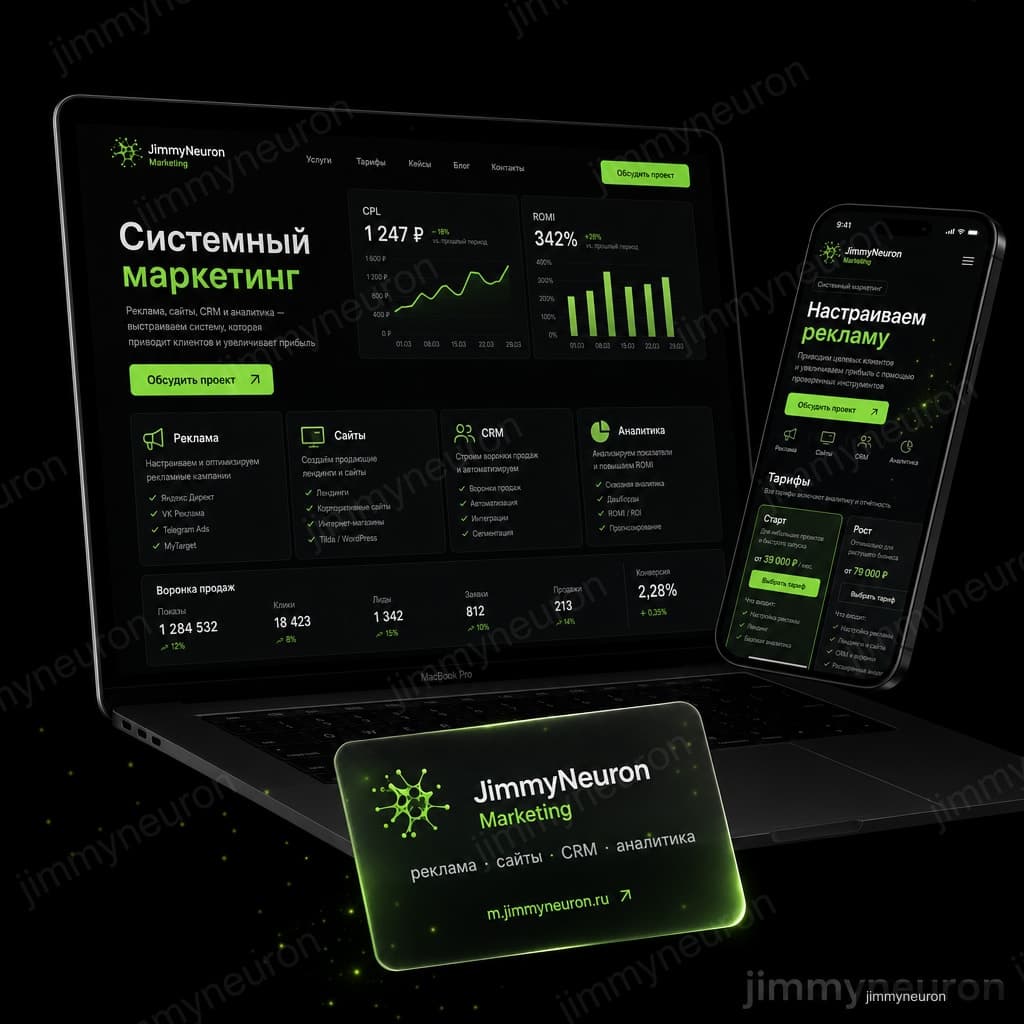
JimmyNeuron Marketing
Системный маркетинг
Реклама, сайты, CRM и сквозная аналитика в одной команде с разработкой. От аудита ниши до потока заявок.
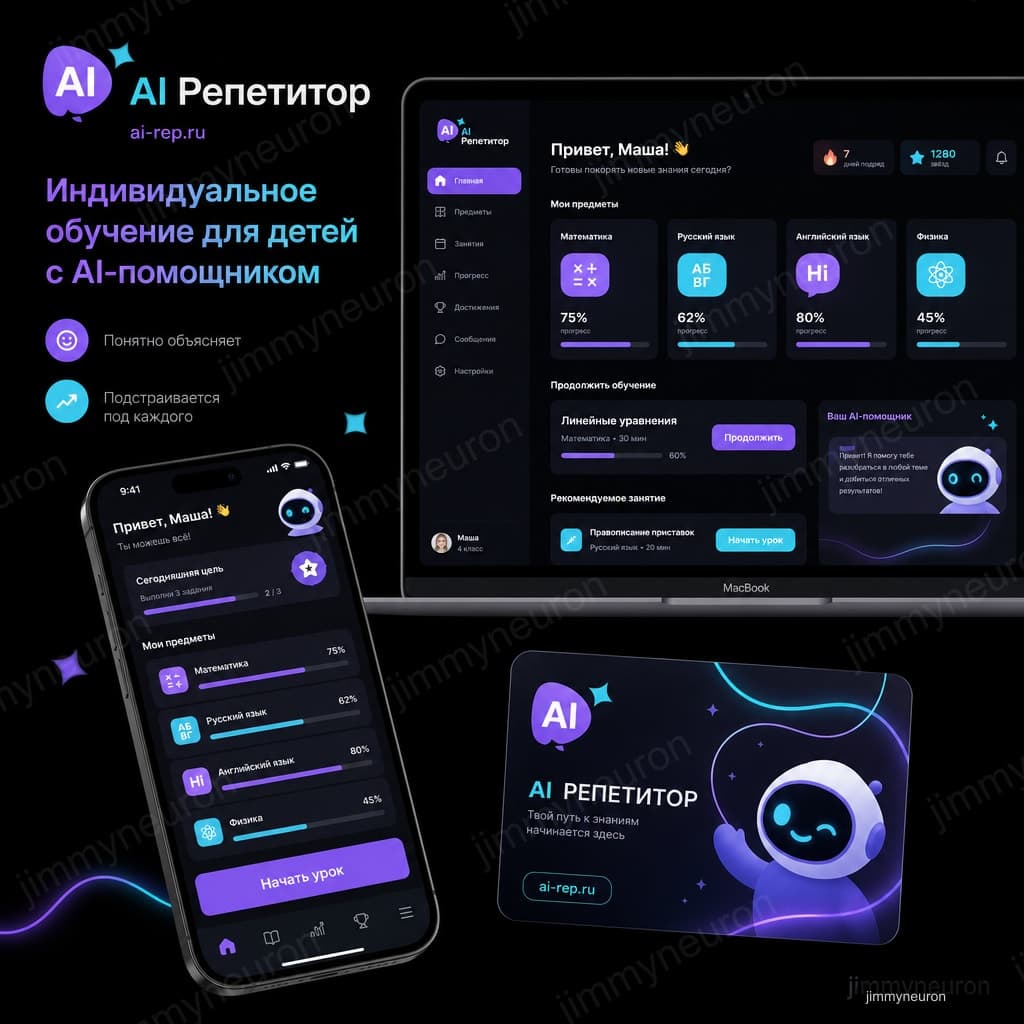
B2C NDA
AI tutor for kids
AI tutor MVP: homework, progress control, and a question bank by subject.