Rus-Bakery
Production line downtime control
Smart-camera system on a production line: control zones, downtime timers, Telegram alerts, and a sound-and-light beacon - so dough and line stops are caught in the moment, not in end-of-shift write-offs.
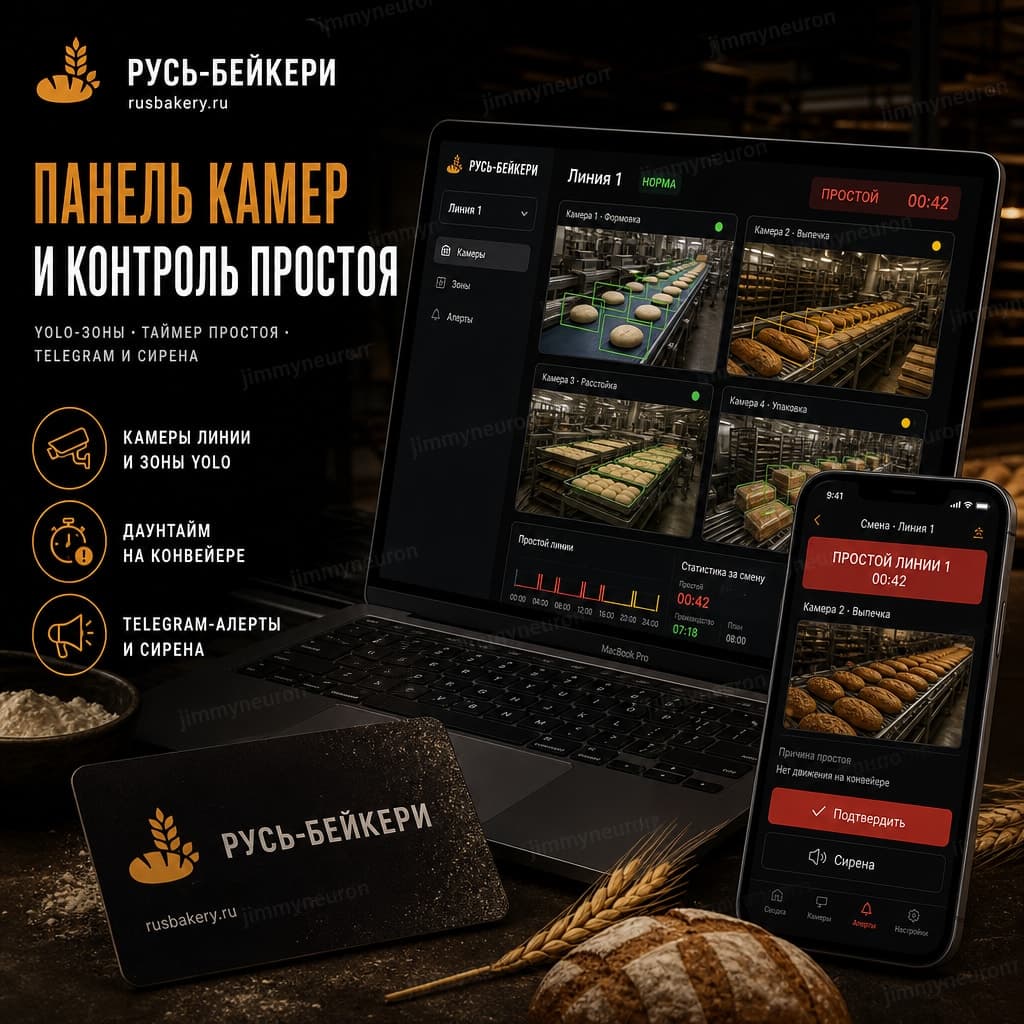
Rus-Bakery
Client
Line 1 downtime
Scenario
2–4 × IP67
Cameras
RUB 550,000–650,000
Client package
edge + local UI
Setup
- 01 · Client
“Rus-Bakery” (International Bakery Corporation) produces European-quality frozen bakery goods: 96+ SKUs for cafés, bakeries, hotels, and restaurants.
- 02 · Challenge
Line downtime and dough losses are caught late, from write-offs rather than at the moment of the event.
- 03 · Solution
We designed and are deploying a contour: industrial IP67 IP cameras, PoE, GPU edge computer, YOLO zone detection, timer business logic, Telegram alerts, local shift-lead dashboard, and siren relay.
- 04 · Result
Built the estimate and architecture for the pilot “Video analytics system for production line #1 downtime control” under shop conditions (humidity, flour).
Rus-Bakery: line downtime video analytics | JimmyNeuron case
About the client
“Rus-Bakery” (International Bakery Corporation) produces European-quality frozen bakery goods: 96+ SKUs for cafés, bakeries, hotels, and restaurants. Site: rusbakery.ru. Downtime and raw-material loss are critical on the line - manual camera watching cannot keep up with the shift.
The challenge we started with
- Line downtime and dough losses are caught late, from write-offs rather than at the moment of the event
- A humid workshop with flour in the air: IP67 cameras are needed, not office ones
- Lighting, metal glare, and varied workwear mean the model cannot be written from guesswork
- More than a log is needed: a shift alert plus a physical siren on the floor
Hardware for the workshop
2–4 outdoor IP cameras in metal housings (IP67, Hikvision / HiWatch, RTSP), a PoE switch, shielded cabling, and an edge compute unit with a discrete NVIDIA GPU for inference. Separately, a 12V sound-and-light beacon and a relay. Lab-grade machine vision is not needed: professional IP cameras at the right angle are enough for a pilot.
CV and business logic
RTSP capture in Python/OpenCV, zones (Zone Detection) based on YOLOv8/v10, and timers: "no movement in zone A for X minutes AND the object on conveyor B is stationary → alert." Telegram notifications and a signal to the siren relay via USB/COM.
Shift dashboard
A local web interface (Streamlit or FastAPI + React): downtime logs, zone statuses, and a siren reset button for the shift supervisor, with no mandatory cloud.
Audit and field calibration
Pre-project: 1–2 days of recording real behavior on the line. Office simulations of failures (camera blocked, disconnected, false triggers). Field tests in the workshop: thresholds set so the siren does not fire when a person steps away for 10 seconds.
Installation and commissioning
Physical installation of cable runs and brackets is done by a low-voltage contractor. Software setup, links, camera angles, and the final run are done by the JimmyNeuron team.
How it works
User scenario
- The shift sees downtime as an event, not an evening review
- A Telegram alert plus a beacon on the floor
- The shift supervisor resets the siren and checks the log in the dashboard
Team / admin scenario
- Cameras send RTSP to the edge node
- The model computes zones and downtime timers
- Trigger → Telegram + siren relay; events are written to the log
Technology
- Cameras
- IP67 Hikvision / HiWatch · RTSP · PoE
- CV
- YOLOv8/v10 · OpenCV · Zone Detection
- Edge
- mini PC + NVIDIA · local inference
- Alerts
- Telegram · relay · sound-and-light beacon
- UI
- shift dashboard (Streamlit / FastAPI)
Timeline: pilot: audit → development → field calibration
Result and business effect
Built the estimate and architecture for the pilot “Video analytics system for production line #1 downtime control” under shop conditions (humidity, flour). Commercial proposal to the client - package 550-650k ₽ turnkey: hardware, CV software, audit on real frames, install and commissioning. Inside the contour - edge inference, YOLO zones, Telegram, and a physical siren. Pilot is being deployed on line #1; after metrics - scale to other sections.
Our effect assumptions
This is a JimmyNeuron estimate based on typical rollouts and scenario logic - not client-confirmed KPIs and not a guaranteed result. Real numbers appear after a pilot with a before/after measurement.
Lower losses thanks to early shift alerts
Dough write-offs and defects caused by downtime
If downtime is caught within minutes rather than at the end of a shift, there is less chance of over-proofing dough and writing off a batch. Exact savings will be known after a pilot on their write-off metrics.
Minutes instead of "when someone noticed by eye"
Foreman reaction time
The siren plus Telegram remove the dependence on whether someone is watching the VMS monitor. The effect can be measured by comparing mean time to react before and after the pilot.
A fit if you need
Frequently asked questions
Questions about this type of project, the same ones clients ask before a similar build.
Do we need new cameras?
Not always. If a camera sees the right zone and provides an RTSP stream, we work with it. For a humid, flour-filled workshop we usually install industrial IP67 cameras: office ones fail quickly there. Hardware is a separate line in the estimate.
Will the siren go off every time someone takes a break?
We tune thresholds on a live shift: how long a zone can stay empty without consequences and what else has to be happening at the same time. Someone stepping away for 10 seconds is not downtime.
Does video go out to the internet?
No. The model runs on the edge unit in the workshop and the dashboard is on your local network. Only the alert text goes out, if you choose Telegram. The system does not recognise faces: it only cares whether someone is in the zone.
How much does a pilot cost?
From RUB 500,000. We give the exact figure after a 1–2 day assessment: how many cameras, whether new ones are needed, workshop conditions, who handles installation. Beyond the pilot, cost depends on the task and hours.
Need a similar pilot on your line?
Describe the shop, camera count, and what counts as downtime - in 1-2 days we’ll return a range, architecture, and success criteria. See also our computer-vision direction.
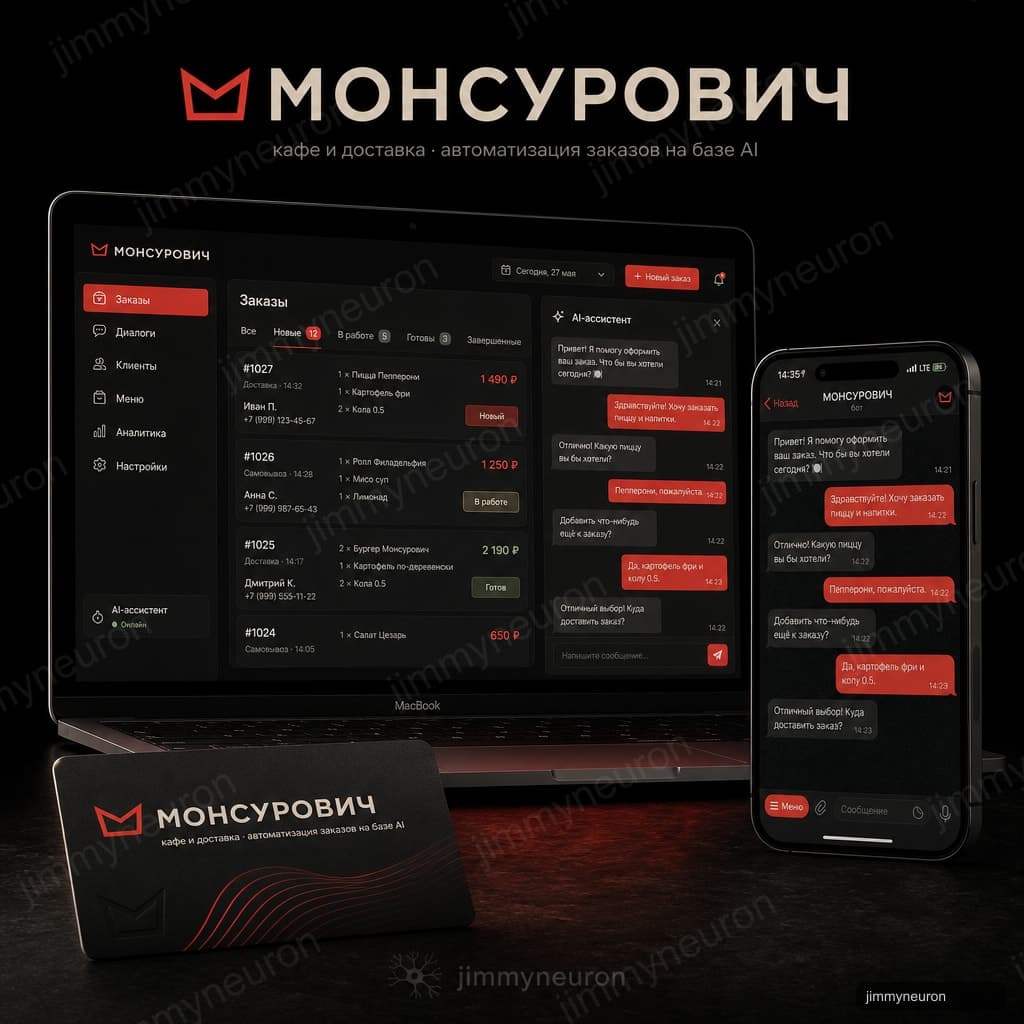
MONSUROVICH
Order automation for a restaurant chain
VK bot with an AI agent: order from chat straight to kitchen and POS. Three delivery locations.
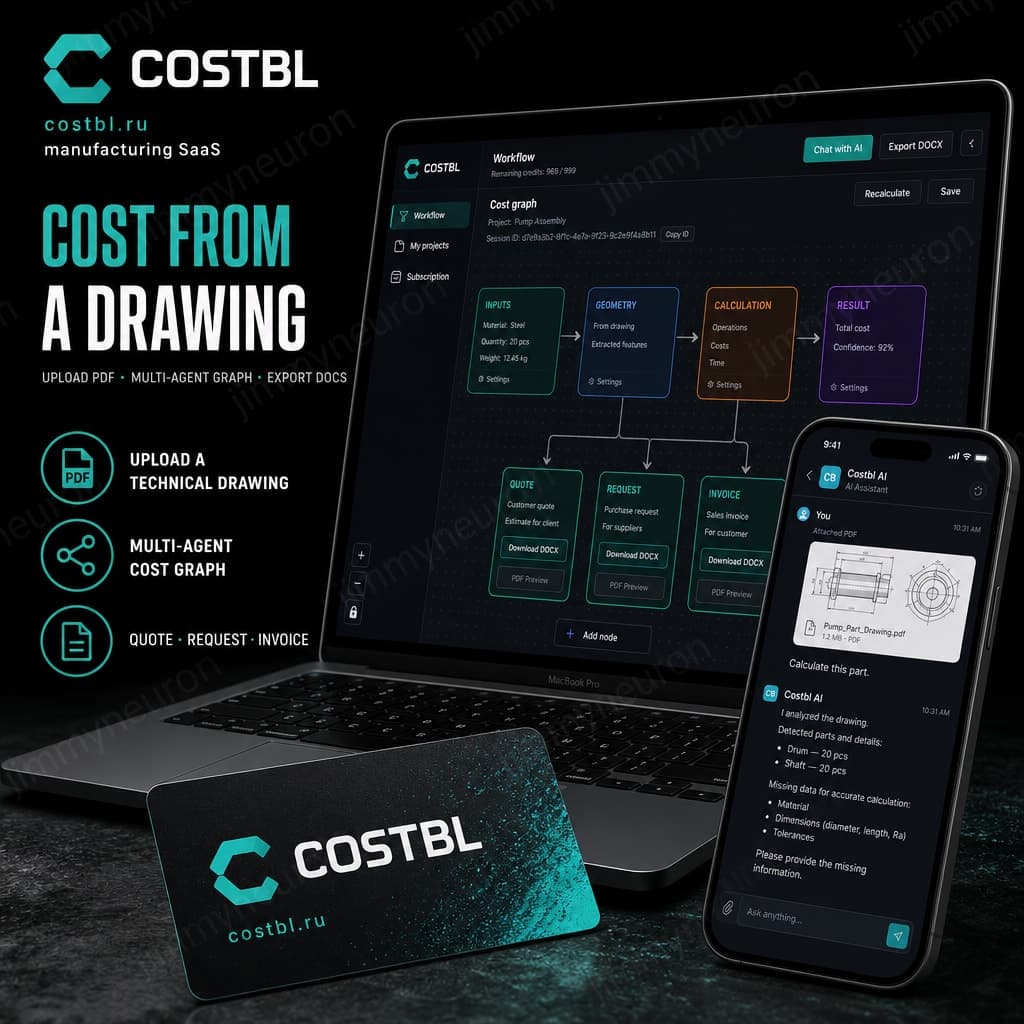
FAVORIT
SaaS cost estimation from drawings
Upload a drawing, multi-agent calculation, and a document pack. 5+ months, two stages.
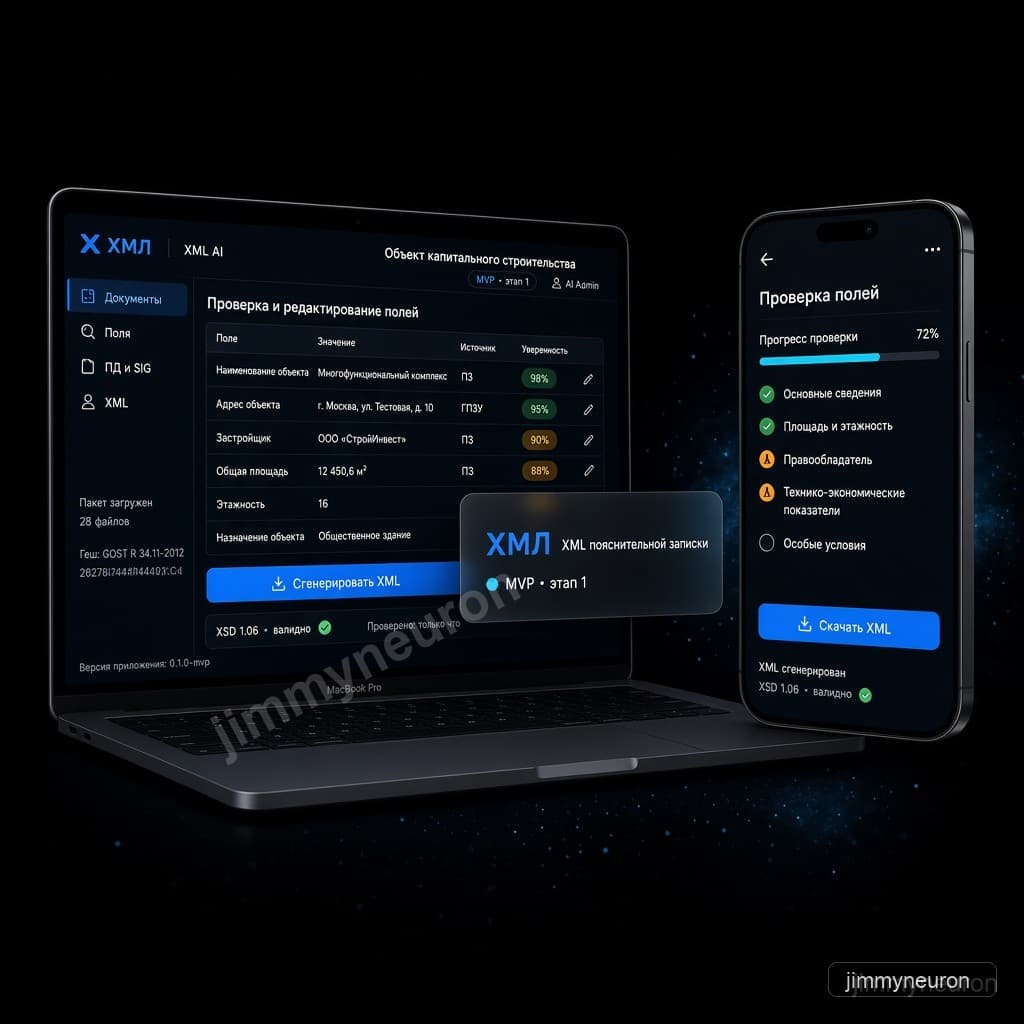
KhML
KhML - Explanatory Note XML
MVP: a set of construction documents → OCR/AI fields → design documentation + SIG → valid explanatory note XML. Stage 1 of 4.